Everest Base Camp Trek
Everest Base Camp Trek ranks among the most famous trekking adventures in Nepal. ...
The Lobuche Peak Climbing – 18 Days is an exciting Himalayan adventure that combines the legendary Everest Base Camp trek with a challenging and rewarding climb of Lobuche East Peak (6,119m). This trek is perfect for adventurous trekkers who want to experience both high-altitude trekking and technical climbing in the Everest region. Compared to Island Peak, Lobuche is slightly more technical, making it ideal for those looking to step up their mountaineering skills.
The journey begins with a scenic flight to Lukla and follows the classic Everest trail through iconic Sherpa settlements such as Namche Bazaar, Tengboche, and Dingboche. Along the way, trekkers are rewarded with breathtaking views of some of the world’s highest mountains, including Everest, Lhotse, Nuptse, and Ama Dablam. The trek also includes acclimatization days to ensure safety and proper adaptation to the high altitude.
The highlight of the journey is the summit of Lobuche Peak, which involves glacier travel, steep snow slopes, and fixed rope climbing. Before the summit push, climbers receive training on mountaineering techniques such as using crampons, harnesses, and ice axes. From the summit, you’ll enjoy incredible panoramic views of the Everest region. This 18-day itinerary is carefully designed to balance trekking, acclimatization, and climbing for a safe and successful expedition.
Your Lobuche Peak adventure begins as you arrive at Tribhuvan International Airport in Kathmandu. After landing, you are transferred to your hotel where you can rest and recover from your journey. This first day is all about preparation—organizing your trekking and climbing gear, checking equipment, and settling into the rhythm of the trip.
Later in the day, you attend a detailed briefing with your guide. You’ll go over the trekking route, climbing plan, safety procedures, and gear checklist. Since Lobuche Peak is more technical than trekking peaks like Island or Mera, this briefing helps you understand the challenges ahead and prepares you mentally for the adventure.
You begin your day with an early morning flight from Kathmandu to Lukla, one of the most exciting airstrips in the world. The flight offers stunning views of hills and snow-covered peaks, giving you your first real glimpse of the Himalayas.
After landing in Lukla, you meet your trekking crew and begin your trek toward Phakding, located at 2,610 meters. The trail is mostly gentle, following the Dudh Koshi River, passing through pine forests, small villages, and suspension bridges. After a few hours of easy walking, you reach Phakding, where you check into a teahouse and relax.
You start your day in Phakding, following the river and crossing multiple suspension bridges, including the famous Hillary Bridge. The trail gradually becomes steeper as you approach Namche Bazaar, making this one of the first physically demanding days of the trek.
After a steady uphill climb through forests and checkpoints, you arrive in Namche Bazaar at 3,440 meters. This lively Sherpa town is the main hub of the Everest region, filled with shops, bakeries, cafés, and stunning mountain views. You check into your lodge, rest, and explore the town.
You spend the day in Namche Bazaar to help your body adjust to the altitude. Instead of staying idle, you take a short hike to Everest View Hotel or visit Khumjung village. These hikes help your body adapt while offering incredible views of the surrounding peaks.
After returning to Namche, you can relax, explore the local markets, or enjoy a warm meal at a bakery. This day is essential to reduce the risk of altitude sickness and prepare for higher elevations ahead.
You leave Namche Bazaar and follow a scenic trail with stunning views of the Himalayas. The path starts relatively flat before descending to the river and then climbing again through forests toward Tengboche, located at 3,860 meters.
After several hours of trekking, you reach Tengboche, home to the famous Tengboche Monastery, the largest monastery in the Khumbu region. You can visit the monastery, observe monks during prayers, and enjoy panoramic mountain views. The peaceful atmosphere makes this a memorable stop.
You begin your day in Tengboche, descending through forests before climbing steadily toward Dingboche, located at 4,410 meters. As you gain altitude, the landscape changes—trees disappear, and the terrain becomes more open and alpine.
You pass through Pangboche village and walk along wide valleys with stone walls and grazing yaks. The air becomes thinner, so you walk slowly and take breaks. After several hours, you reach Dingboche, a beautiful village surrounded by mountains, where you rest and enjoy the high-altitude scenery.
You spend the day in Dingboche for proper acclimatization. You take a short hike to Nagarjun Hill or nearby ridges, which helps your body adjust to the altitude while offering incredible panoramic views of surrounding peaks and glaciers.
The climb may feel challenging due to the thinner air, but it’s very beneficial for your body. After returning to Dingboche, you rest, hydrate, and prepare for the higher altitude trekking and technical climbing phase ahead. This day plays a crucial role in ensuring a safe and successful Lobuche Peak climb.
From Dingboche (4,410m), you begin trekking toward Lobuche (4,940m), entering higher alpine terrain above the tree line. The path winds along the glacial moraine, with rocky ridges, scattered boulders, and narrow trails that demand careful footing. Along the way, you’ll notice memorial sites and cairns dedicated to climbers and trekkers who lost their lives in the Himalayas—these are both somber and inspiring reminders of the mountains’ power.
The air is thinner at this altitude, so you pace yourself slowly, taking frequent breaks to acclimatize. The landscape opens up with expansive views of peaks like Nuptse, Lhotse, and Ama Dablam, giving trekkers a spectacular introduction to the high Himalayas. Upon arrival in Lobuche village, you check into a teahouse or lodge, rest, and enjoy the crisp mountain air.
Your day begins with a trek from Lobuche to Gorak Shep (5,164m), the last settlement before Everest Base Camp. The trail follows glacial moraines and sandy valleys, with views of the Khumbu Glacier and surrounding peaks. Along the route, you will notice the stark, dramatic alpine landscape—this is where the Himalayas truly feel immense.
After a short rest in Gorak Shep, you continue to Everest Base Camp (5,364m). This is one of the most iconic locations in the world for mountaineers. The area is dotted with tents of expeditions preparing for Everest summits. You can walk along the terminal moraine, observe massive icefalls, and take in the views of Everest’s South Face. After soaking in the experience, you descend back to Gorak Shep for the night, enjoying a well-earned rest at altitude.
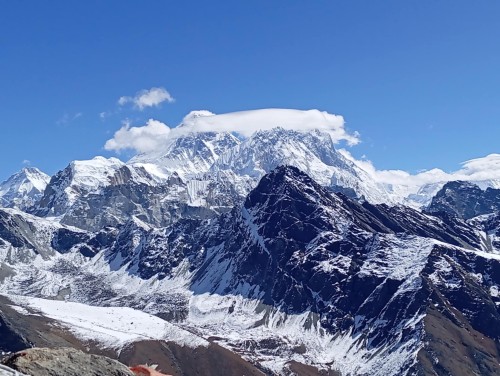
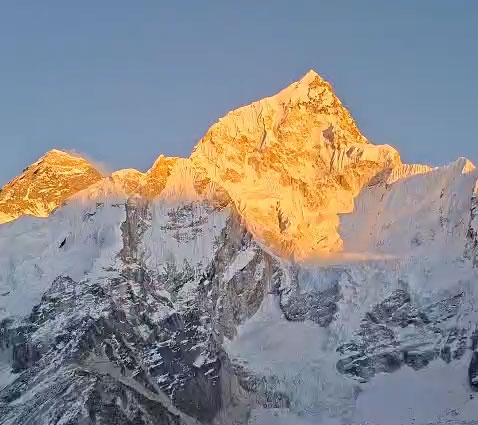
Wake up early for the sunrise hike to Kala Patthar (5,545m), the ultimate viewpoint for Everest. The trek is steep but manageable, with loose gravel and rocky steps. As you climb, the sun rises over the peaks, illuminating Everest, Nuptse, Lhotse, and Pumori—a view that feels almost unreal.
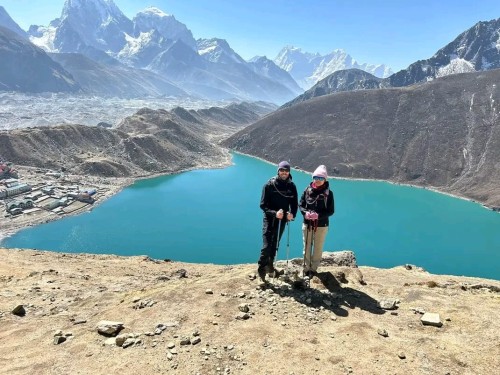
Once at the summit of Kala Patthar, you spend time taking photographs, marveling at the vast Himalayas, and feeling the exhilaration of standing at one of the world’s most breathtaking vantage points. After absorbing the sunrise spectacle, you carefully descend back to Lobuche, enjoying the moraine paths again and reflecting on the incredible high-altitude scenery.
Today is all about preparing for the climb. From Lobuche, you move to Lobuche Peak Base Camp (5,400m), following rocky trails and scattered alpine terrain. The base camp is situated near glaciers, ridges, and steep slopes, providing a perfect location for organizing climbing gear.
Upon arrival, guides help you review your technical equipment—crampons, ice axes, ropes, harnesses—and brief you on the climbing route. This day is also important for resting and acclimatizing further before the high-altitude summit attempt. The surroundings are serene, with snow-dusted peaks rising dramatically on all sides.
From base camp, you ascend a short but demanding climb to High Camp (5,600m). The trail winds over rocky terrain, snow patches, and glacial ridges. This camp is strategically located to allow a safe and manageable push to the summit early the next morning.
At High Camp, the views of Lobuche Peak’s north face and neighboring peaks are breathtaking. The team double-checks all climbing equipment and routes. Even though the day is shorter in terms of trekking hours, the high altitude and preparation work make it physically and mentally challenging.
Summit day begins before dawn. You leave High Camp in the dark with headlamps, moving steadily along the snow and ice-covered route. Using crampons and ice axes, you carefully ascend steep slopes and navigate rocky ridges.
Reaching the summit of Lobuche Peak (6,119m) is an unforgettable achievement—panoramic Himalayan views stretch in every direction, including Everest, Nuptse, and Lhotse. After a moment of celebration and photographs, you descend carefully back to High Camp and continue to Pheriche (4,240m), where a warm meal and rest await. This day is the most physically and mentally demanding, but also the most rewarding.
After the peak climb, you descend through familiar trails, passing Dingboche, Pangboche, and forested paths to reach Namche Bazaar (3,440m). The descent allows your body to recover from the high-altitude exertion while enjoying the scenery one more time.
Namche offers a comfortable lodge stay, hot meals, and the chance to celebrate the successful Lobuche Peak climb with your team. You can also explore local markets, visit bakeries, and reflect on the incredible journey through the Khumbu region.
After celebrating your successful summit, you begin the descent from Namche Bazaar (3,440m) to Lukla (2,840m). The trail gently winds through forests of pine and rhododendron, passes through small Sherpa villages like Phakding, and crosses several suspension bridges over the Dudh Koshi River.
The descent feels much easier than the uphill journey, but it’s important to maintain careful footing on rocky or slippery paths. Along the way, you can pause to enjoy river views, terraced fields, and the local way of life, greeting villagers and watching their daily routines. Arrival in Lukla is a joyous moment—the completion of a challenging trek and climb. Overnight in a comfortable lodge, savoring your achievements.
Early in the morning, you take a short flight from Lukla to Kathmandu, a spectacular aerial journey over the Himalayan peaks and valleys. From the air, the glacial ridges, high alpine terrain, and winding rivers offer a unique perspective on the mountains you just explored.
Upon arrival in Kathmandu, you transfer to your hotel to relax. The evening can be spent shopping, reflecting on your journey, or enjoying a cultural dinner in the city. This is the perfect time to rest after the strenuous trek and peak climb.
On the last day, you are transferred to Tribhuvan International Airport for your onward journey. As you leave, you carry unforgettable memories of Lobuche Peak, the Khumbu region, and the breathtaking Himalayan adventure, along with photographs, stories, and a sense of accomplishment that will last a lifetime.
Lobuche Peak is considered moderate to challenging and is more technical than Island Peak. The climb involves glacier travel, steep snow and ice slopes, and the use of fixed ropes. Climbers need good physical fitness and should be comfortable with basic mountaineering techniques. Proper guidance and training provided during the trek make it achievable for prepared trekkers.
While not mandatory, prior experience in trekking or basic mountaineering is highly recommended. Climbers will receive training before the summit attempt, including how to use crampons, ropes, and ice axes. This helps build confidence and increases the chances of a successful summit.
The highest point is the summit of Lobuche East Peak at 6,119 meters. At this altitude, oxygen levels are significantly lower, making acclimatization and pacing essential for a safe climb.
Yes, Lobuche Peak is generally considered more technical and slightly more difficult than Island Peak. It involves steeper climbing sections and requires better balance and endurance. However, both peaks are achievable with proper preparation and guidance.
Yes, travel insurance is mandatory for this trek. It must cover high-altitude trekking and climbing, including emergency evacuation and helicopter rescue. This ensures safety and financial protection in case of emergencies.
Everest Base Camp Trek ranks among the most famous trekking adventures in Nepal. ...
Everest View Trek offers Himalayan views of Mount Everest, Namche Bazaar, and Te ...